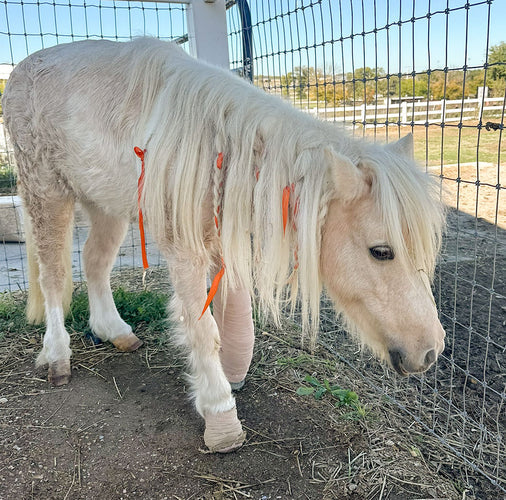
We first saw this sweet girl advertised online. She was being ridden despite being so thin her ribs were showing, and her hooves were so overgrown they had begun to break apart. As she walked and turned, it was clear she was uncomfortable and imbalanced. We knew she needed help.
So we brought her home—and headed straight to the hospital for a full evaluation with Dr. Chisholm at Weems & Stephens Equine Hospital.
A Full Head-to-Hoof Exam
 To understand exactly what she needed, the veterinary team performed a thorough workup, including:
-
Bloodwork
-
X-rays of her feet and injured back leg
-
Ultrasound of her chest and lungs
-
Weight check
-
Dental exam
What the Tests Revealed
 Thankfully, much of the news was encouraging.
Her bloodwork looked normal, and imaging showed healthy feet. The swollen back leg did have a wound, but there was no significant internal damage. She was placed in a sweat wrap for seven days to help the swelling go down.
Her chest and lungs were clear, with no signs of fluid or pneumonia. She weighed 1,470 pounds, but ideally needs to gain at least 200 more pounds to reach a healthy condition.
Her teeth were in good shape as well, though they will need to be floated within the next six months. Based on her exam, veterinarians estimate she is around 18 years old.
A Name Fit for a Queen
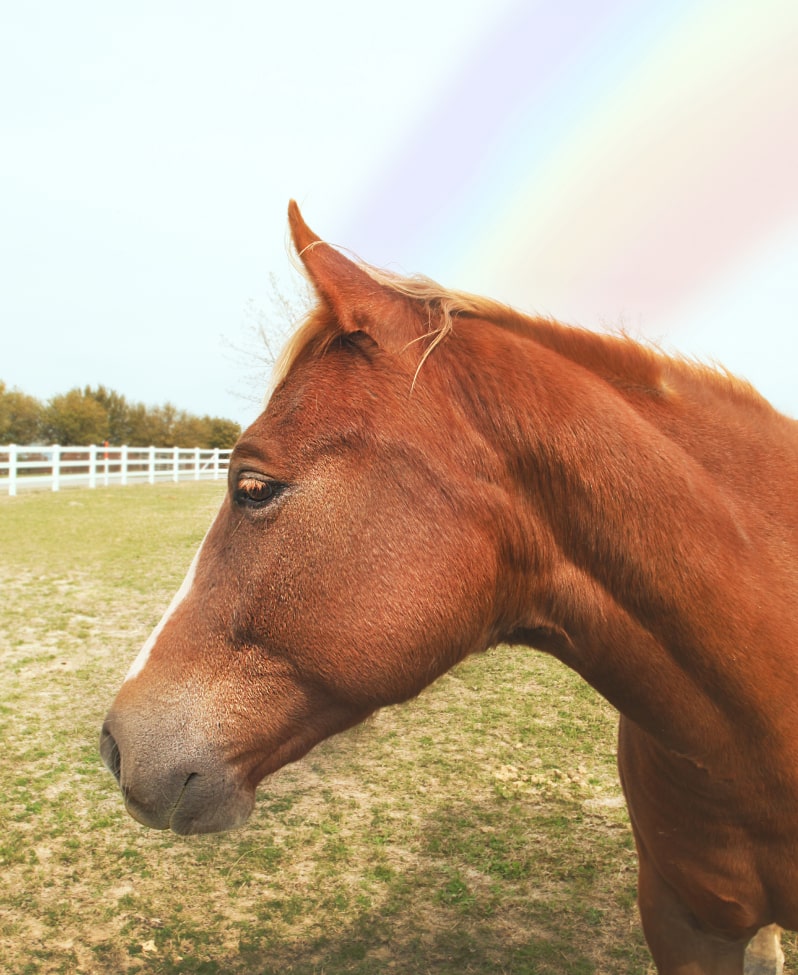
This beautiful girl is a Percheron draft horse, and her striking coloring immediately reminded us of an ice queen.
So we named her Elsa.
Starting Her Recovery
 Elsa was placed on Equisol for 10 days to treat the leg injury. Once she returned home, we placed her in quarantine, where we monitor her closely with twice-daily temperature checks.
Quarantine is a standard precaution for all new arrivals, helping ensure both the newcomer and the rest of the herd stay healthy.
A New Concern Appears
A few days later, we noticed a large lump forming under Elsa’s jaw.
Dr. Metcalf came out to examine her and used an ultrasound to take a closer look. The lump turned out to be a deep abscess. He was able to open it so it could begin draining, but at that point we didn’t yet know what had caused it.
The Diagnosis: Strangles
A few days later, Elsa began having thick yellow discharge from one nostril.
 Dr. Metcalf returned and used an endoscope to examine her guttural pouch, where he discovered additional abscesses.
This confirmed the diagnosis: Strangles, a highly contagious equine respiratory disease.
Careful Monitoring
For now, the most important thing we can do is monitor Elsa closely. Strangles can cause high fevers and make horses feel very run-down and miserable, so we continue checking her temperature twice a day.
Unfortunately, there is no quick cure—the disease simply has to run its course while we support her and keep her comfortable.
While we never like seeing it, we are very experienced with managing Strangles and follow strict biosecurity protocols to protect the rest of the herd.
Bright Spirits in Quarantine
 Despite everything, Elsa has been in wonderful spirits.
While she remains in quarantine, she can still see all of her neighbors throughout the day, and our herd walks the track that circles around her area—so she’s never far from the action.
And that big, gentle Percheron personality is already shining through.
We’ll continue sharing updates as Elsa heals, gains weight, and settles into sanctuary life.