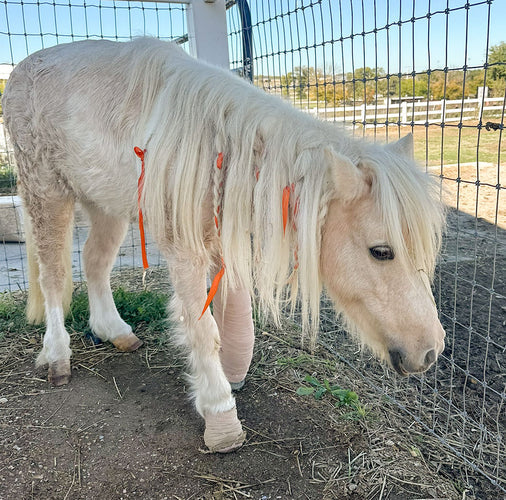
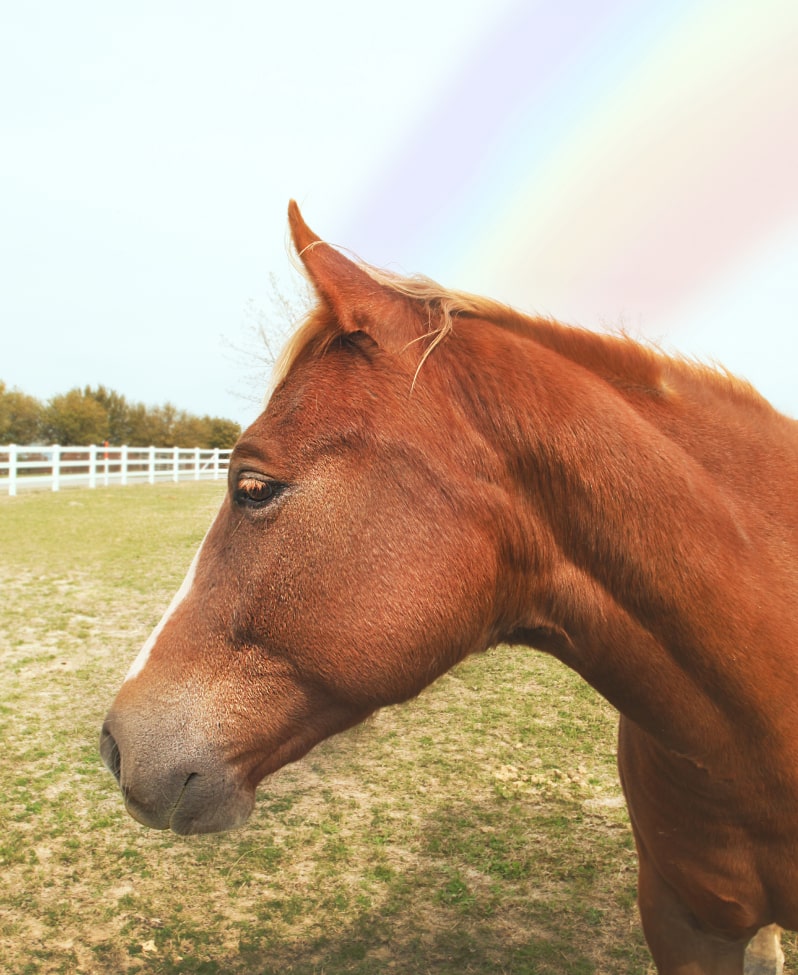
One morning, Elliott suddenly lost strength in his legs. He was able to get back up at first, but moments later he collapsed again and struggled to stand. We immediately called our veterinary team and made the decision to rush him to Texas A&M Veterinary Hospital.
We didn’t know what was happening. Was it his heart? Something neurological? Something else entirely?
All we knew was that Elliott needed help.
Finding Answers
 After arriving at Texas A&M, Elliott showed us just how strong he was. He was eating, comfortable, and still had his sweet personality shining through.
But testing revealed that Elliott was facing a serious heart issue.
An echo showed extensive lesions on his heart, along with either a mass or thickening of the heart walls. Without invasive testing, the doctors couldn’t confirm a 100% diagnosis, but they believed he was dealing with either cancer or endocarditis (a heart infection).
The veterinary team believed the episode that brought him in was likely related to a cardiac event.
The difficult part was knowing we couldn’t undo the damage that had already happened—but we could focus on keeping him comfortable and giving him the best chance possible.
Coming Home to Rest and Recover
 Because Elliott improved so much at the hospital, his team felt confident sending him home with medications, a plan, and lots of rest.
He was sent home with instructions for stall rest, antibiotics, steroids, and one very important job: relax and gain weight.
Elliott rode home comfortably in the backseat of the truck, complete with his hay pillow, while Christa made sure he had a calm and stress-free trip back to the ranch.
Once home, he settled in with his buddy Karl, surrounded by extra hay, a quiet space, and plenty of love.
A Heart We’re Still Fighting For
Over the next few days, we continued watching Elliott closely.
We added extra cooling, adjusted medications, and did everything we could to support him. He continued enjoying his hay, had moments where his sweet personality came through, and still loved spending time with Karl.
There were some ups and downs in his condition, and his veterinary team continued working closely with us to monitor changes and adjust his care plan as needed.
Our vet later confirmed that Elliott was experiencing atrial fibrillation—an irregular heart rhythm that helped explain the moments of weakness we were seeing.
His veterinary team will continue researching options and guiding us through the best next steps for his care. We remain deeply grateful for every moment of support, and for a veterinary team that cares so thoughtfully for Elliott’s comfort and wellbeing.